
NEXT LEVEL STRATEGY
TOTAL WAR: WARHAMMER 3
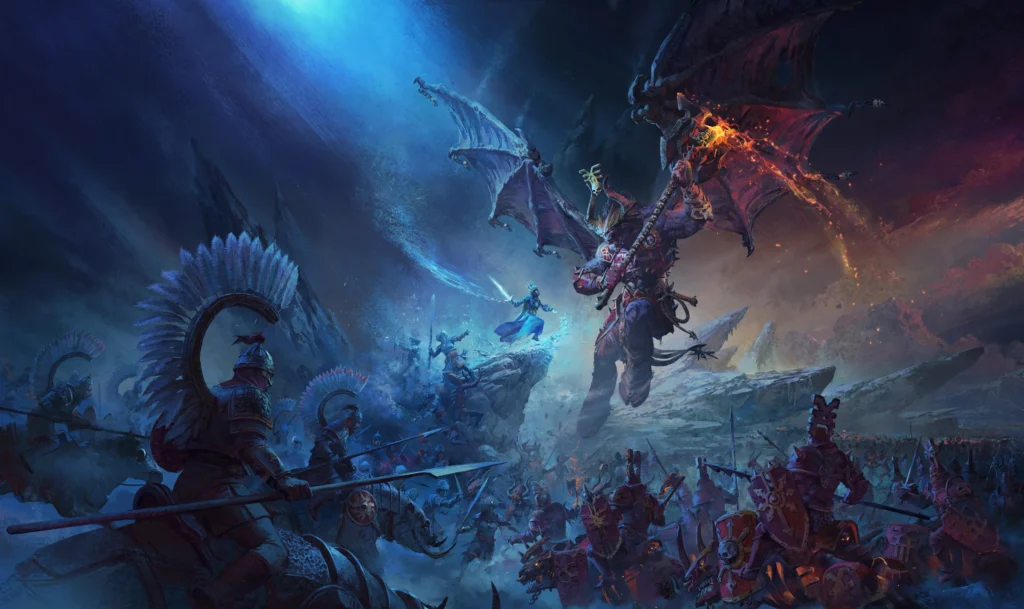
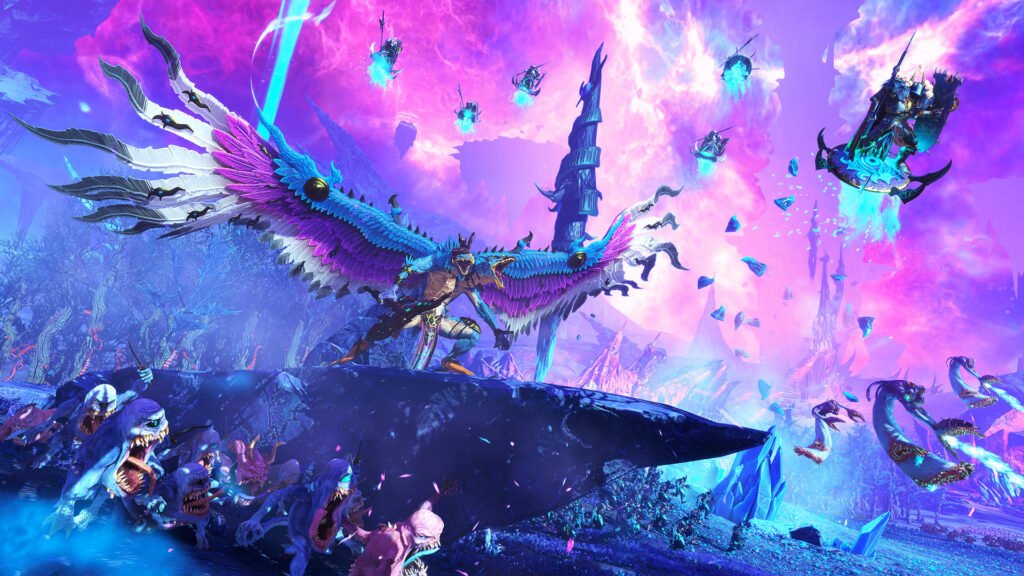
Total War: Warhammer III is Creative Assembly’s grand, bombastic finale to one of the most ambitious strategy trilogies ever made. It doesn’t just aim to conclude a saga—it seeks to overwhelm you with scale, spectacle, and systems, marrying turn-based empire management with real-time battles that feel closer to mythic warfare than historical reenactment. When it works, it’s breathtaking. When it stumbles, it does so under the sheer weight of its own ambition.
At launch, Warhammer III introduced the Realm of Chaos campaign, a narrative-driven structure that pushed players into the Warp itself. This was a bold departure from the sandbox freedom the series is known for. While atmospheric and inventive, the structure initially felt restrictive to longtime players who preferred emergent storytelling over scripted urgency.
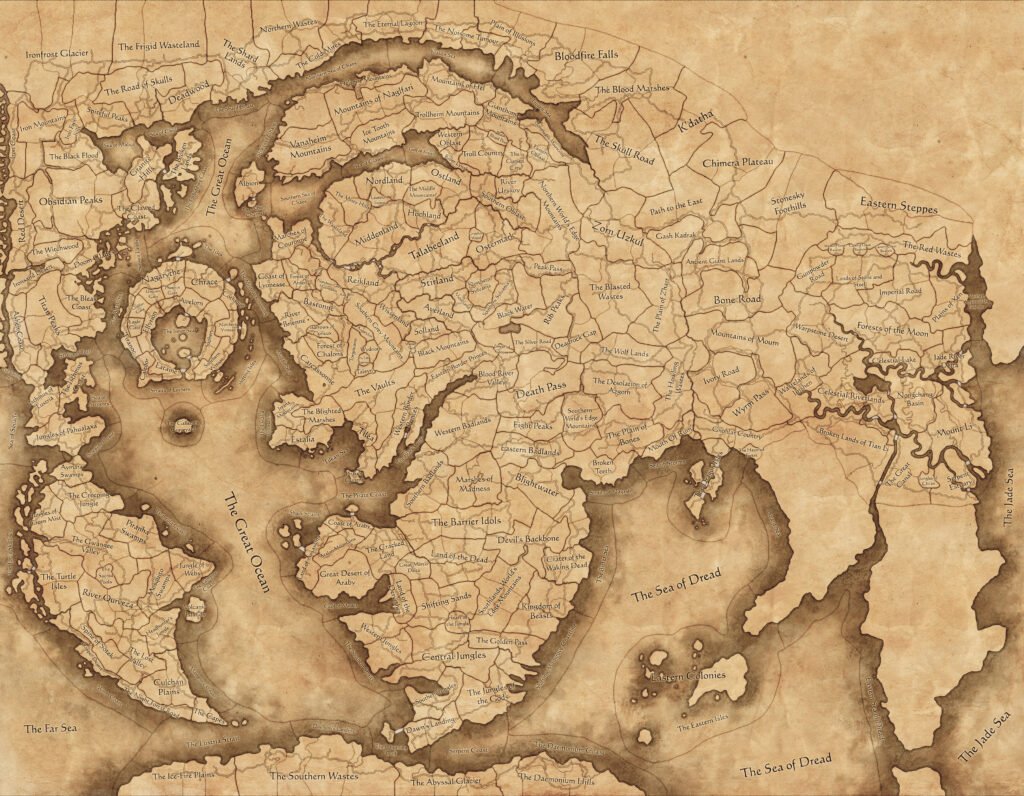
That concern was largely resolved with the arrival of Immortal Empires, which transformed the game into the definitive Total War sandbox: a colossal map combining all three Warhammer titles into a single, absurdly massive campaign. Here, Warhammer III truly shines. The sense of scope is unmatched—hundreds of factions, dozens of races, and an endless number of political and military permutations.
Warhammer III boasts some of the most imaginative factions ever seen in strategy gaming:
The Daemon factions (Khorne, Tzeentch, Nurgle, Slaanesh) play radically differently from one another, reflecting their gods’ philosophies not just thematically, but mechanically.
Kislev blends grim Eastern European folklore with disciplined hybrid warfare.
Grand Cathay introduces harmony-based mechanics that reward balance and careful positioning, both on the campaign map and in battle.
Each faction feels handcrafted rather than reskinned, with unique economies, unit rosters, and strategic incentives. This variety is Warhammer III’s greatest strength—and also its steepest learning curve.
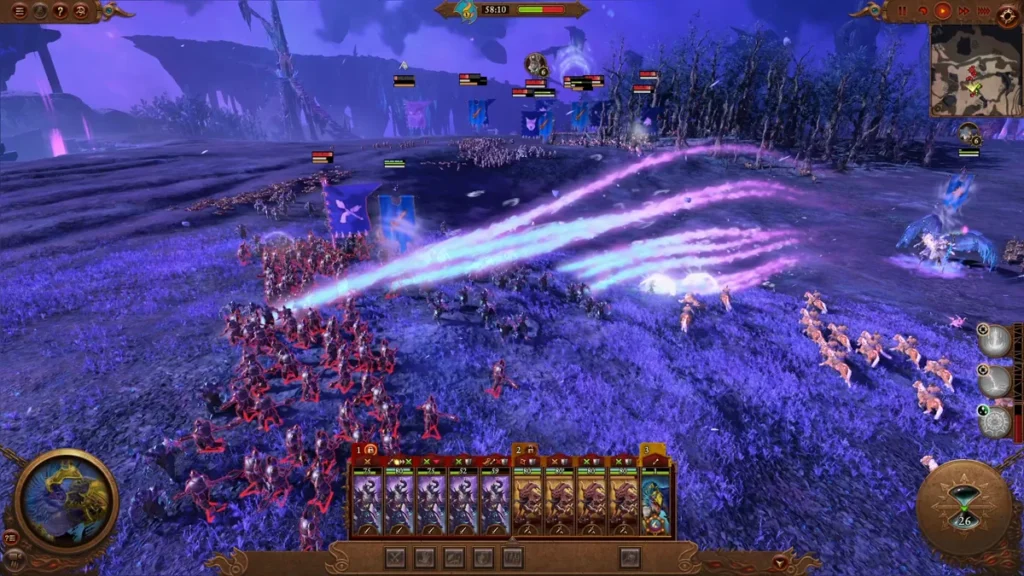
Real-time battles remain the heart of Total War, and Warhammer III delivers some of the most visually spectacular engagements in the series’ history. Daemons tear through infantry, artillery reshapes landscapes, and magic can turn the tide of battle in seconds. Unit animations are lavish, sound design is thunderous, and the sense of scale is consistently impressive.
That said, battles can occasionally tip into visual chaos—appropriate for the setting, but sometimes at the cost of clarity. Veterans will adapt quickly; newcomers may find themselves overwhelmed.
Over time, Creative Assembly has significantly improved balance, AI behavior, and quality-of-life features. The game today is far more refined than it was at launch. Add to that a steady stream of DLC, reworks, and free updates, and Warhammer III feels less like a static product and more like a living platform.
However, it is demanding—both in hardware requirements and player commitment. Load times, performance dips in massive battles, and the need to own earlier games to access the full Immortal Empires experience may deter more casual players.
Total War: Warhammer III is not just a strategy game; it’s a culmination. It rewards patience, curiosity, and a willingness to engage with deep, sometimes intimidating systems. For fans of grand strategy, fantasy, or the Total War formula, it stands as one of the most content-rich and imaginative experiences the genre has ever produced.
It is imperfect, occasionally unwieldy, and unapologetically massive—but for those willing to meet it on its own terms, it offers hundreds of hours of unforgettable warfare on a truly apocalyptic scale.
CRUSADER KINGS 3
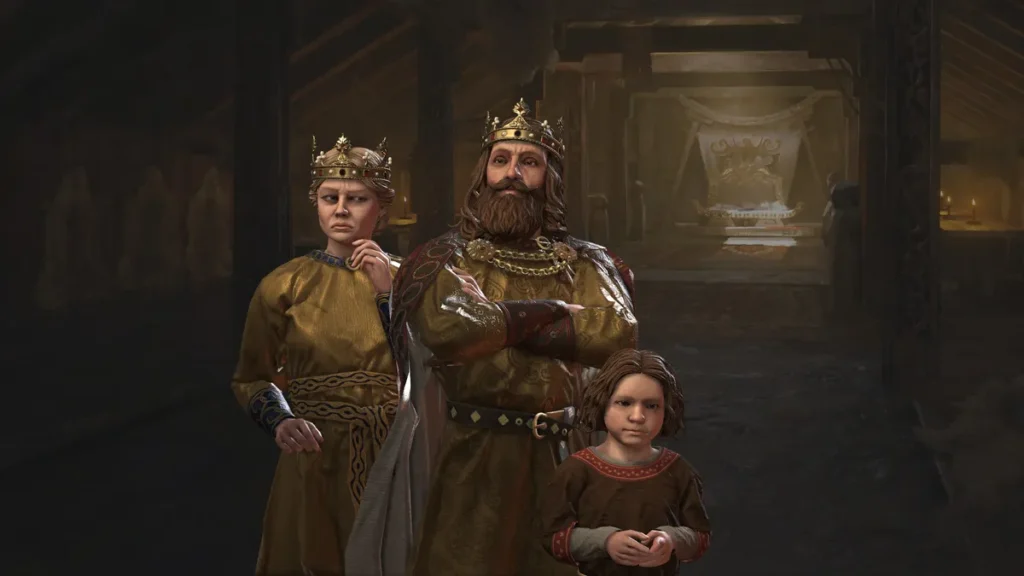
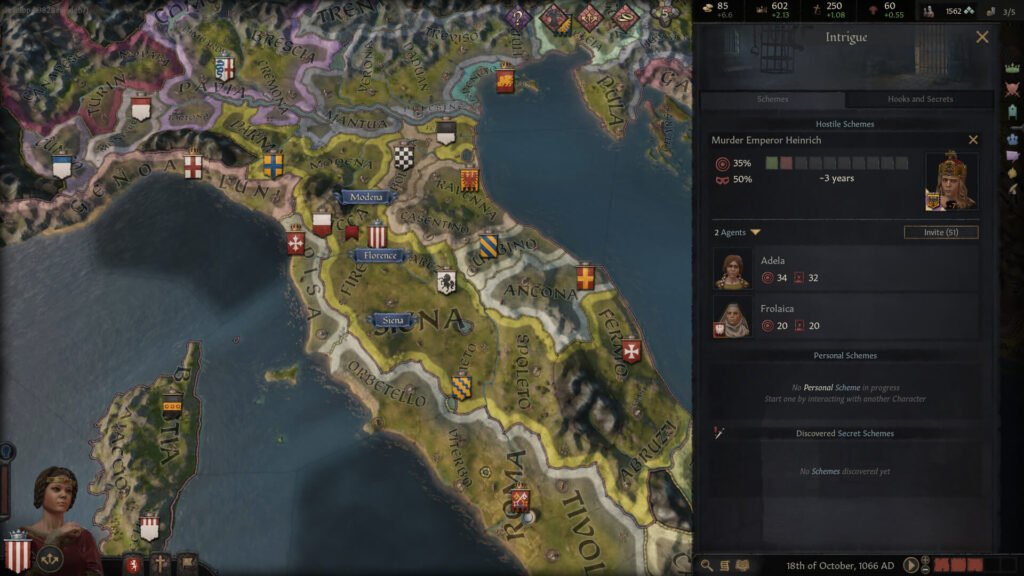
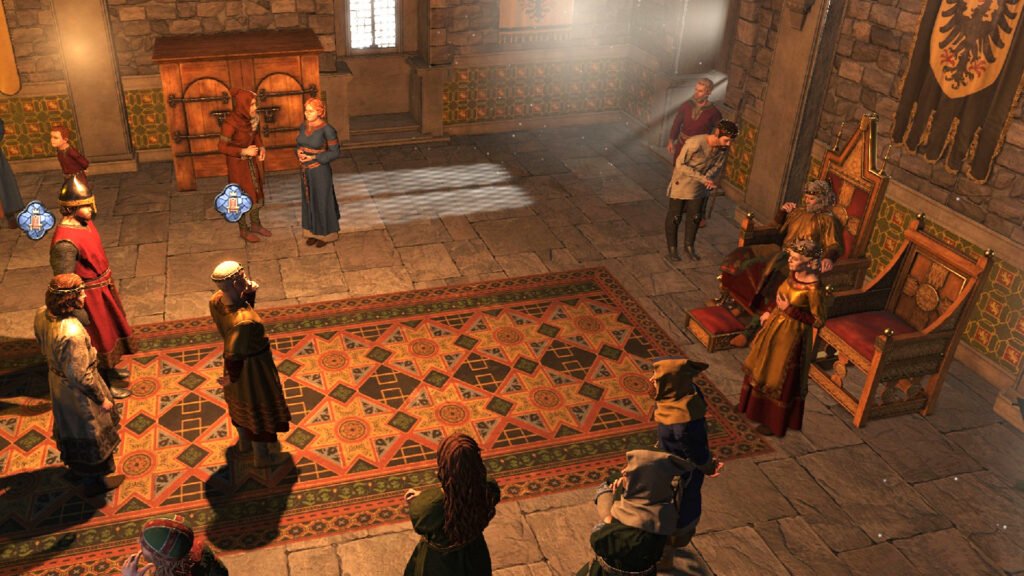
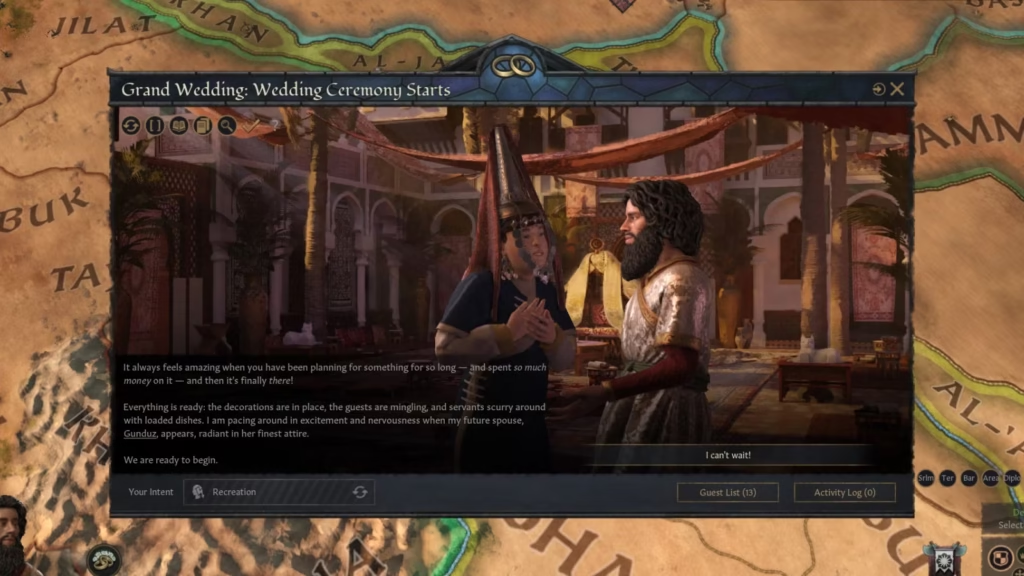
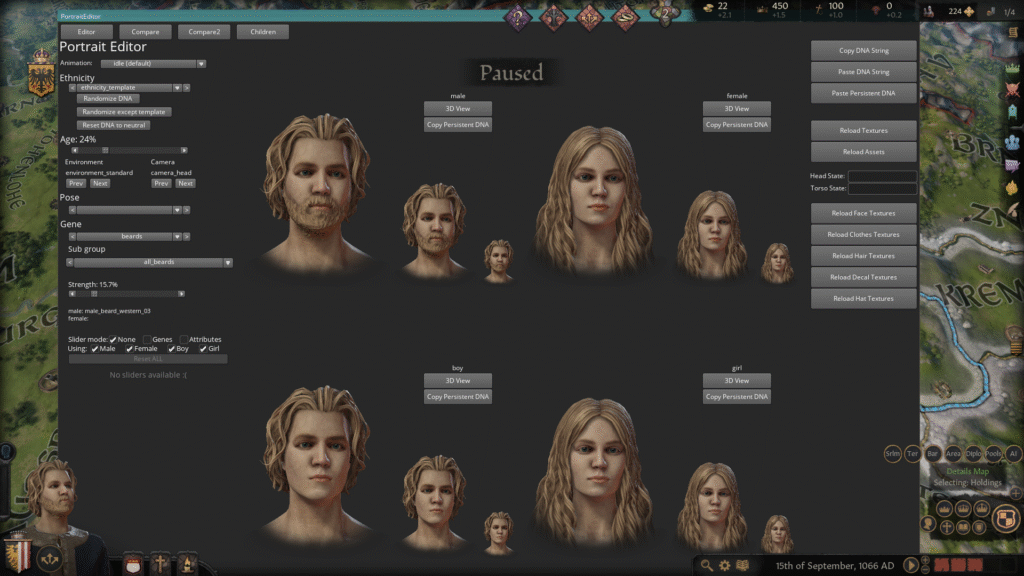
Crusader Kings III is less a traditional strategy game and more a living medieval drama engine—one where politics, personality, and human weakness matter just as much as armies and gold. It takes Paradox’s famously dense formula and refines it into something far more accessible, without sacrificing depth.
At its core, Crusader Kings III is about people, not nations. You don’t play “France” or “England”; you play a ruler—and when that ruler dies, you inherit their heirs, problems, grudges, and bad decisions. This generational structure is where the game truly shines. Every character has traits that shape their behavior: a paranoid king may see plots everywhere, while a compassionate queen might struggle to rule with an iron fist. These traits aren’t flavor text—they actively shape choices, outcomes, and the stories that emerge.
The role-playing systems are stronger than ever. Lifestyles such as Intrigue, Diplomacy, Learning, and Warfare provide long-term direction for your ruler, while events constantly test your intentions. Do you imprison a rival and risk rebellion, or tolerate them and watch them scheme in the shadows? CK3 excels at presenting morally gray decisions where there’s rarely a clean, optimal answer.
Mechanically, the game is more approachable than its predecessors. Tooltips are clear, nested, and informative, making even complex systems understandable without endless wiki dives. New players can grasp succession laws, vassal management, and claims far more easily, while veterans will still find immense depth beneath the surface. The interface is clean, readable, and visually coherent—an underrated achievement for a game this complex.
Warfare, while not the central attraction, is functional and purposeful. Battles are less about micromanagement and more about preparation: alliances, commanders, terrain, and timing matter more than twitch decisions. The focus remains on politics and dynasty management, where CK3 truly differentiates itself from other grand strategy titles.
Visually, Crusader Kings III is a major step forward for the genre. The character models are expressive and surprisingly personal—you will remember faces, not just names. The map is elegant and clear, conveying vast amounts of information without overwhelming the player. The soundtrack complements the experience well, reinforcing the sense of weight and consequence behind every decision.
If there is a weakness, it’s that the mid-to-late game can occasionally feel predictable once you’ve mastered the systems. Power snowballing is possible, and some campaigns may lose tension unless you deliberately role-play flaws or take risks. That said, the game almost invites you to do exactly that—to lean into chaos, ambition, and failure, rather than chasing pure optimization.
Crusader Kings III succeeds because it understands that history is messy, personal, and often absurd. It generates stories that feel uniquely yours: dynasties ruined by scandal, empires held together by marriages, wars started over wounded pride. Few strategy games can match its ability to surprise, amuse, and frustrate in equal measure.
Crusader Kings III is one of the most compelling grand strategy games ever made—deep, readable, and endlessly replayable. It’s not about winning history; it’s about surviving it, one flawed ruler at a time.
Don’t Miss Out
Sign Up Today for Exclusive Offers and Updates!
Mad Gamer Deals is dedicated to providing gamers with the latest and greatest in games and equipment for premium experiences