
MINDBOGGLING PUZZLES
BLUE PRINCE

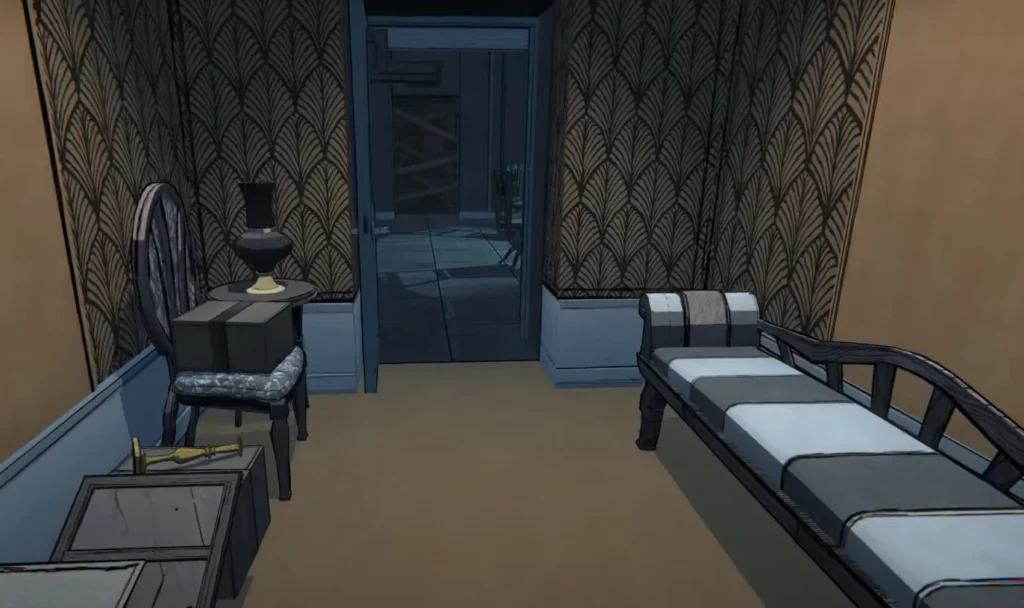
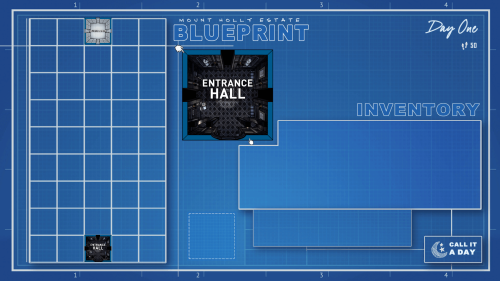
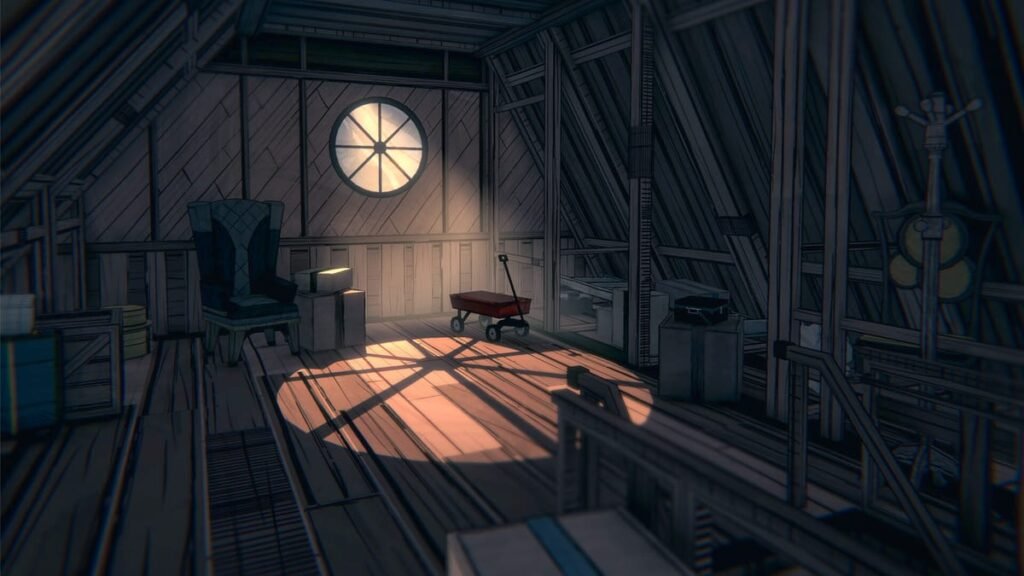
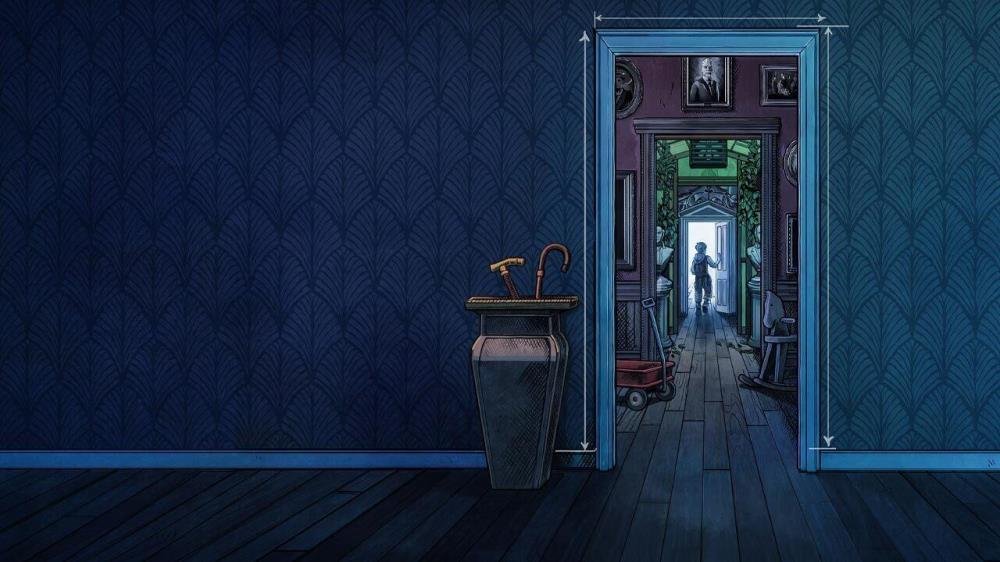
Blue Prince is a puzzle game that feels quietly confident in its intelligence. It doesn’t rush you, it doesn’t shout its themes, and it certainly doesn’t explain itself more than necessary. Instead, it invites you into a strange, ever-shifting mansion and asks you to pay attention—because attention is the real currency here.
A Mansion That Thinks Back
At the heart of Blue Prince is a brilliant central idea: each day, you design the layout of the mansion room by room, choosing from a limited set of possibilities. Every choice matters. Some rooms grant resources, others unlock new mechanics, and some exist purely to mislead or tempt you into poor decisions. The house resets daily, but your understanding does not.
This creates a fascinating tension between planning and improvisation. You may have a long-term goal in mind, but the game constantly forces you to adapt. What begins as a simple spatial puzzle gradually evolves into a layered strategic experience, where foresight, memory, and experimentation are essential.
Puzzles Rooted in Discovery
Rather than presenting isolated brainteasers, Blue Prince weaves its puzzles directly into the structure of the game. Solutions are rarely obvious and often require knowledge gained from previous failed attempts. The game trusts the player to connect dots without highlighting them, which makes every breakthrough feel genuinely earned.
There’s a strong sense that the mansion is hiding rules you haven’t learned yet—and that sense of mystery drives you forward. Even small discoveries can dramatically alter how you approach future runs, reframing rooms you once ignored as suddenly invaluable.
Atmosphere Over Exposition
Narratively, Blue Prince is subtle and restrained. The story emerges through environmental clues, cryptic notes, and the unsettling logic of the house itself. It’s not a tale delivered in cutscenes, but one inferred through repetition and reflection. The tone is quietly eerie rather than overtly frightening, leaning more toward psychological unease than horror.
Visually, the game embraces a clean, stylized aesthetic that keeps the focus on clarity and mood. The color palette and architectural design reinforce the sense that this mansion exists slightly outside of reality—familiar enough to understand, strange enough to distrust.
A Game That Respects the Player
What sets Blue Prince apart is how much it respects your intelligence. It never tells you the “right” way to play. Failure isn’t punished; it’s expected. Each reset feels less like a setback and more like a recalibration, encouraging you to refine your strategy and test new theories.
That said, this design won’t appeal to everyone. Players who dislike ambiguity or trial-and-error learning may find the early hours frustrating. Progress can feel slow until the underlying systems begin to click.
Final Verdict
Blue Prince is a meticulously crafted puzzle game that rewards patience, curiosity, and critical thinking. It’s not about solving one puzzle—it’s about understanding a system that slowly reveals itself over time. The satisfaction comes not from completion, but from mastery.
For players who enjoy thoughtful design, layered mechanics, and puzzles that linger in your mind long after you stop playing, Blue Prince is a quietly exceptional experience.
THE OUTER WILDS
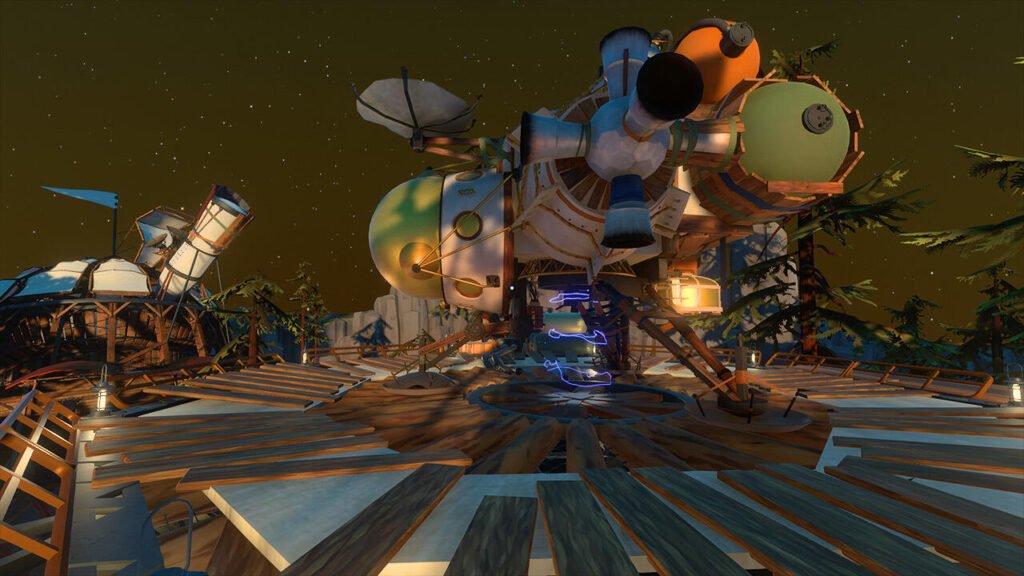
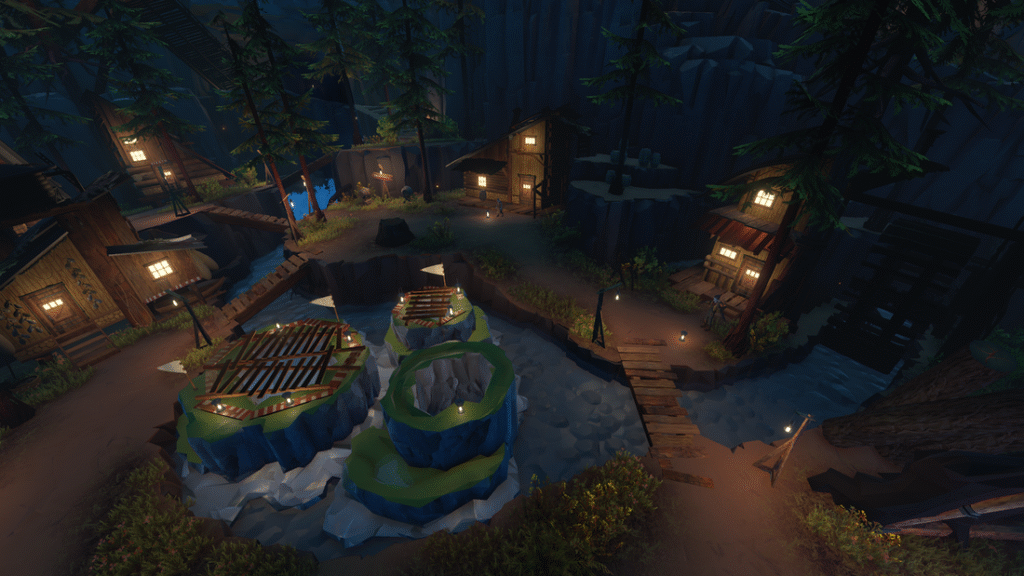
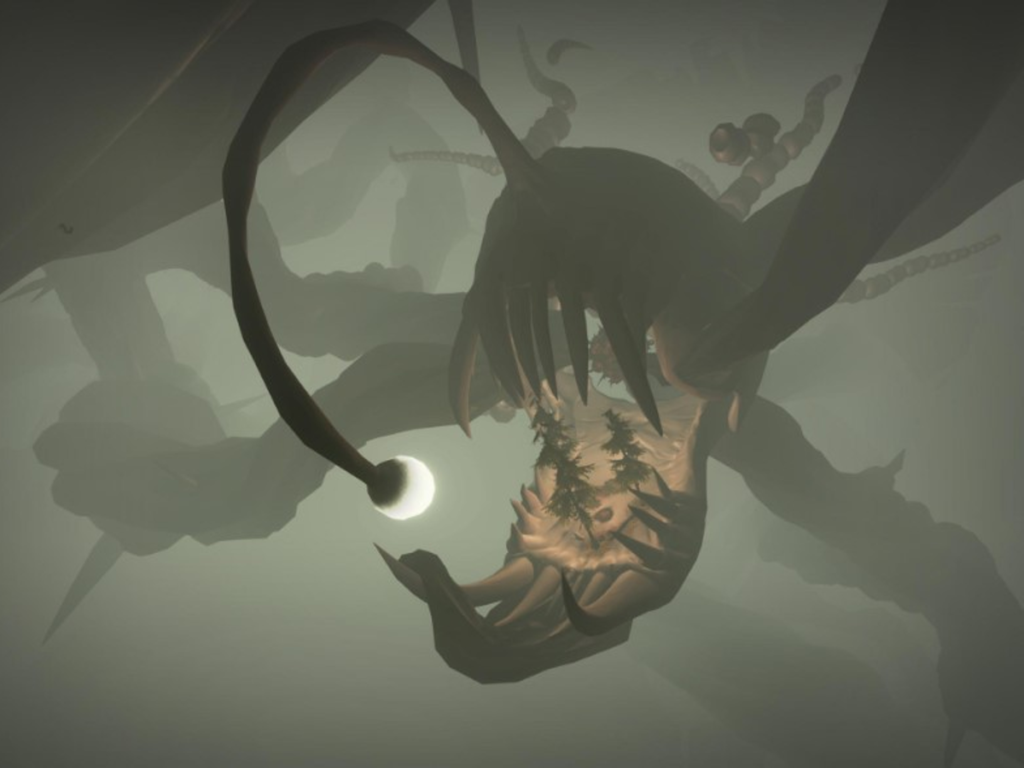
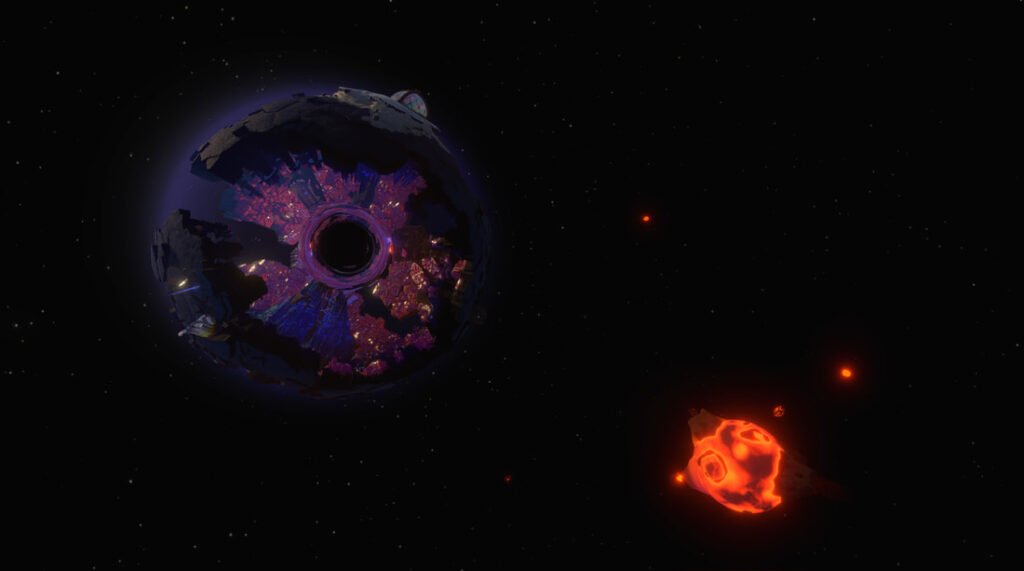
Outer Wilds is one of those rare games that quietly rewires how you think about exploration, storytelling, and even failure. It doesn’t rely on combat, skill trees, or traditional progression. Instead, it asks for curiosity, patience, and a willingness to be lost—and then rewards you with one of the most profound experiences modern games have to offer.
A Universe Built on Curiosity
You play as a newly minted space explorer in a handcrafted solar system that is both playful and terrifying. Each planet is governed by its own strange physical rules: collapsing worlds, rising sands, time-locked ruins, and cosmic phenomena that feel more like puzzles than set pieces. There are no quest markers or hand-holding prompts. Your only true tool is knowledge—what you learn, remember, and piece together across repeated journeys.
The solar system operates on a fixed time loop, resetting every cycle. At first, this seems like a limitation. Over time, it becomes the game’s greatest strength. Each loop deepens your understanding of how the universe works, transforming confusion into mastery without ever changing your character’s stats. Progress exists entirely in your mind.
Storytelling Without Exposition
The narrative unfolds through ancient ruins, cryptic writings, and environmental clues left behind by a long-gone civilization. Rather than telling you what happened, Outer Wilds trusts you to uncover the truth yourself. The story is intimate and cosmic at the same time—personal discoveries set against the inevitability of entropy and time.
What makes the writing so effective is restraint. It never overwhelms, never explains too much, and never breaks immersion. By the end, the story feels earned because you assembled it piece by piece, not because the game forced it upon you.
Atmosphere and Sound
Visually, Outer Wilds is deceptively simple. Its art style is warm and stylized, but it masks an astonishing level of creativity in planet design and environmental storytelling. Every location feels distinct, memorable, and purposeful.
The soundtrack deserves special mention. Sparse, melancholic, and occasionally hopeful, the music drifts in and out at exactly the right moments. It reinforces the game’s central themes—wonder, loneliness, impermanence—without ever becoming intrusive. Few games use silence as effectively as Outer Wilds.
Not for Everyone—and That’s Okay
This is not a game for players who need constant action or explicit objectives. The controls can feel floaty at first, and moments of confusion are inevitable. But for those willing to engage on the game’s terms, these frustrations melt away into something far more meaningful.
Mistakes are part of the experience. Failure isn’t punished—it’s encouraged. Every misstep teaches you something new, and every discovery feels personal.
Final Verdict
Outer Wilds is a landmark achievement in game design. It proves that progression doesn’t need numbers, that stories don’t need cutscenes, and that exploration can be both playful and deeply philosophical. It’s not just a game you play—it’s a universe you come to understand.
If you value curiosity over combat and discovery over direction, Outer Wilds is essential. Once it’s over, you won’t just remember it—you’ll carry it with you.
Don’t Miss Out
Sign Up Today for Exclusive Offers and Updates!
Mad Gamer Deals is dedicated to providing gamers with the latest and greatest in games and equipment for premium experiences.